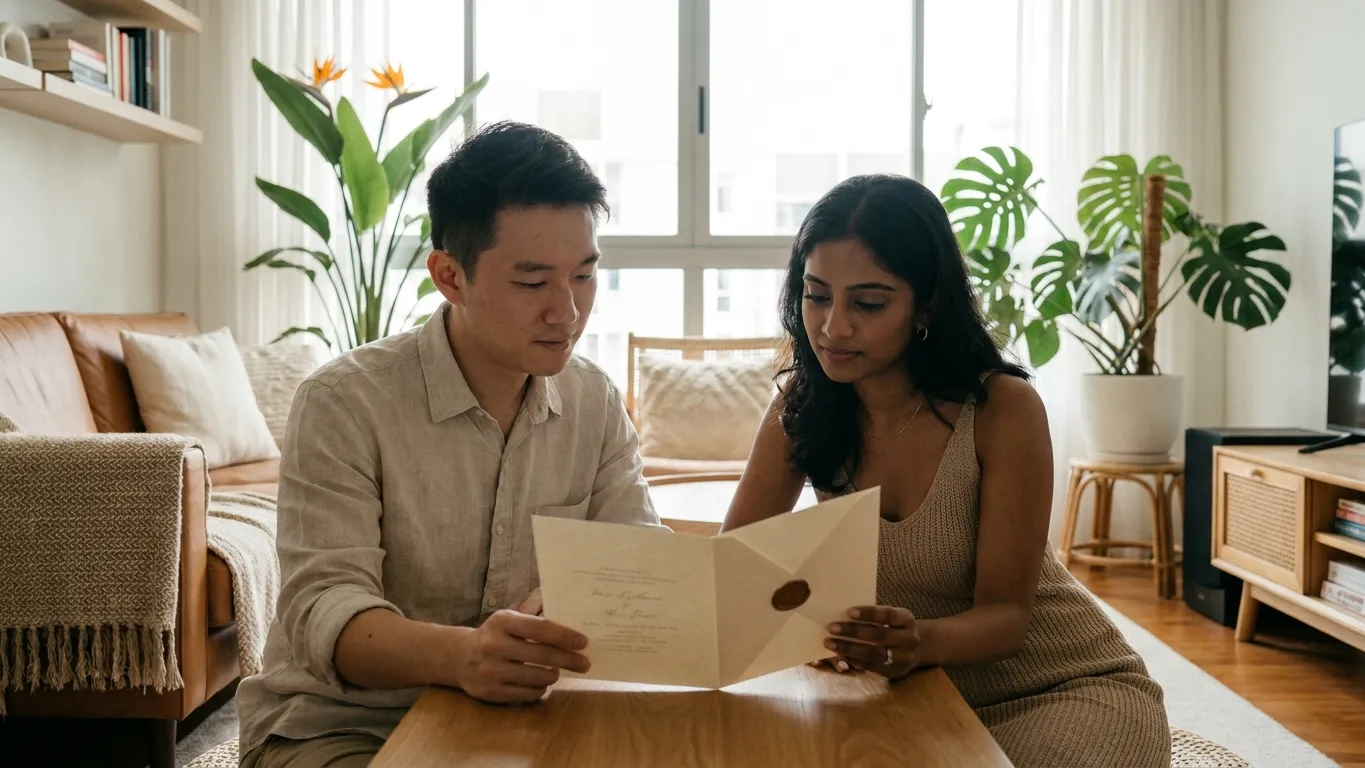
The best wedding planner in Singapore is not always the most decorated one. It is the one whose scope of service, communication style, and price point match exactly what you need. And those three things vary more than most couples expect before they start shortlisting.
Singapore weddings have moving parts that catch people off-guard: the 21-day notice requirement at the Registry of Marriages, hotel ballrooms that book out 12 to 18 months ahead, Chinese tea ceremony sequencing, September-to-November monsoon afternoons that can erase an outdoor plan in 20 minutes. Whether you handle that yourself, with a freelancer, or with a full planning team depends on your time, budget, and appetite for logistics.
This guide explains how the Singapore wedding planning market is structured, what each type of service costs, how to evaluate any vendor before signing, and what questions to ask.
---
The Three Types of Wedding Planning Support in Singapore
The Singapore market breaks cleanly into three categories. Most couples land in exactly one, but it helps to understand all three before deciding.
1. Solo Freelance Coordinators
A solo coordinator typically takes on a limited number of weddings per year and offers close personal attention. The trade-off is that coordination falls almost entirely on the couple during the months of vendor sourcing, and a single person has no backup if they fall ill on the actual day. Day-of coordination from solo freelancers tends to run from around S$1,500 to S$3,500 depending on experience and hours covered.
2. Boutique Planning Studios
A small team of two to five people with a consistent aesthetic. Boutique studios often specialise: some focus on garden solemnisations, others on heritage shophouse receptions in Chinatown or Tanjong Pagar, others on hotel ballroom productions in Marina Bay. Their fee structures typically sit between full freelancers and all-in-one bridal studios. Partial planning packages from boutique studios in Singapore generally range from around S$3,000 to S$8,000, while full planning can reach S$10,000 or beyond depending on scale.
3. All-in-One Bridal Studios
These bundle the most commonly outsourced wedding elements, typically gown, makeup artistry, photography, and videography, under a single contract. The appeal is fewer vendors to manage, a predictable price, and a single point of contact. All-in-one bridal studios such as The Aurora Wedding bundle gown, makeup, photography and videography from around S$798 for an entry-level package, with PGVG (photographer and videographer) actual-day packages from around S$1,988. They do not replace a dedicated logistics planner for large-scale banquets, but for couples who want fewer touchpoints and a coherent look across all their visual assets, the model is efficient.
---
What Does a Wedding Planner Actually Cost in Singapore?
Prices cluster around three service tiers. The table below shows the broad market ranges you will encounter when shortlisting.
| Service Tier | Typical Singapore Market Range | Best For |
|---|---|---|
| Actual Day Coordination only | S$1,500 to S$3,500 | Couples who have done their own planning and need ground management on the day |
| Partial Planning | S$3,000 to S$8,000 | Couples who want vendor advice and timeline help but not full hand-holding |
| Full Wedding Planning | S$8,000 to S$20,000+ | Couples with demanding schedules, large guest lists, or complex multi-ceremony events |
Full planning fees vary significantly based on guest count, complexity, and the planner's vendor network strength. A 50-person garden solemnisation in Tiong Bahru with a simple dinner to follow is priced very differently from a 30-table Chinese banquet in a Marina Bay ballroom with a Guo Da Li session, gatecrash, and tea ceremony on the same day.
The most expensive hour of a wedding is the one nobody schedules: the gap between solemnisation and dinner. A good planner fills it purposefully. A missing planner leaves guests milling around a hotel lobby.
---
The Singapore ROM Process: What a Planner Should Know Cold

Any planner or coordinator worth hiring should be able to walk you through this without hesitation.
Under current requirements according to marriage.gov.sg, couples must submit their Notice of Marriage online at least 21 days before the solemnisation date, and can file up to 6 months in advance. The application fee is S$42 if at least one party is a Singapore Citizen or Permanent Resident, or S$380 if both parties are foreigners. The marriage application expires 6 calendar months after submission.
A key fact many couples miss: the ROM building has temporarily relocated in 2026. Multiple sources confirm it is now operating from an interim site at Level 3, Esplanade Mall while the Canning Rise building undergoes redevelopment. Always verify the current location and appointment procedures at marriage.gov.sg before planning your trip.
For Muslim couples, registration is handled separately through ROMM (Registry of Muslim Marriages) at romm.gov.sg, not through ROM. Interfaith couples should clarify their pathway early.
If you plan to solemnise at an external venue rather than the registry itself, you must engage a licensed solemniser from ROM's official list. The solemnisation is legally identical regardless of where it happens; the venue changes the experience, not the legal standing. Both partners, two witnesses aged 21 or above, and the licensed solemniser must be physically present at the declared venue with original NRICs or passports on the day.
Insider tip: Saturday solemnisation slots at popular external venues fill out very quickly, often 6 to 12 months ahead for prime weekends and NDP-adjacent dates. Lock in your venue before filing the Notice of Marriage, because the venue address is required at point of application.
---
How to Evaluate a Wedding Planner: 7 Questions That Reveal the Truth
Hiring based on Instagram aesthetics alone is a common shortcut that tends to cause regret. Here is a more useful framework.
- How many weddings do you personally manage per month? A solo coordinator running six events in November has thinner attention per client than one capping at two.
- What happens if you or your team member is sick on the actual day? Legitimate studios have a named backup plan. Vague answers are a signal.
- Can I see a detailed run-of-day timeline from a recent wedding similar to mine? This reveals operational rigour better than any testimonial.
- Which vendors do you have preferred relationships with, and are those relationships exclusive? Some planners receive referral fees that influence recommendations. Knowing upfront matters.
- What is your wet weather contingency process for outdoor events? September to November monsoon afternoons are not rare. A planner without a practised answer for this is a liability at a Sentosa garden ceremony.
- What exactly is and is not included in the quoted fee? Printing, transport, setup labour, florals and decor styling are often separately billed. Get the full list in writing before signing.
- Can I speak with two or three couples you have worked with in the past 12 months? Recent references are more telling than testimonials on a website.
---
Planning Timeline: When to Book What

The sequence matters as much as the selections. Singapore venues, especially hotel ballrooms, move on early.
| Stage | Months Out |
|---|---|
| Settle on a rough guest count and budget range | 18 to 24 months |
| Book the banquet venue or solemnisation venue | 12 to 18 months |
| Engage your wedding planner or coordinator | 9 to 12 months for full planning; 3 to 6 months for coordination only |
| Book photographer, videographer, and gown | 9 to 12 months |
| File Notice of Marriage at marriage.gov.sg (minimum 21 days before, up to 6 months in advance) | 3 to 6 months |
| Confirm licensed solemniser through ROM portal | 3 to 4 months |
| Final vendor briefings and run-of-day timeline sign-off | 4 to 6 weeks |
| Venue walkthrough with planner and all key vendors | 1 to 2 weeks |
Insider tip: Do not wait for the ROM application window to open before locking in your external venue. The venue address is required on the ROM application form itself. Couples who book the venue first, then file, avoid this snag.
---
What a Planner Cannot Replace
A good planner manages logistics. They do not replace the other creative decisions that compound into the look and feel of a wedding.
The photography and videography vendor choice is one of the most consequential outside the venue. A planner may have preferred suppliers, but couples should review portfolios independently. Studios offering combined photographer-and-videographer packages, often called PGVG bundles, simplify coordination because both shooters are briefed together, share a timeline, and deliver a consistent visual style. For actual day wedding photography and videography, packages in Singapore typically start from around S$1,988 for 8 hours of coverage with both roles covered.
Other elements outside a planner's standard scope, unless explicitly contracted, include: bridal bouquet design, car decoration, makeup trial scheduling, and gown fitting timelines. Clarify each one before signing the planning contract.
---
Singapore-Specific Details Good Planners Know Without Being Asked

Local fluency separates a competent planner from a great one. A few signals to listen for:
- Tea ceremony sequencing. Eldest paternal relatives are typically served first. A planner who does not know this can accidentally offend both families before the banquet even begins.
- HDB gatecrash logistics. A void deck gatecrash in Tampines or Jurong runs differently from a condominium lobby setup. Lift timing, neighbour noise ceilings, and natural light all vary.
- Banquet hall audio. Large hotel ballrooms often have audio delay at the back tables. A planner who has worked these rooms knows to position the emcee and brief the AV team in advance.
- ECP and CTE traffic on Saturday mornings. A bridal convoy leaving Orchard at 9am on a Saturday hits different traffic than a weekday. Experienced planners buffer the motorcade timeline accordingly.
- Monsoon season contingency. September through November afternoon storms can arrive in under 15 minutes. Any outdoor element, from a Botanic Gardens solemnisation to a Sentosa garden reception, needs a named indoor backup space confirmed in writing before the day.
---
Closing Thought
The Singapore wedding planning market offers genuine options at every price point and scope level. Couples who do their own coordination with a disciplined checklist and a trusted day-of coordinator often land just as well as those who hire full-planning studios, provided they have the time. Couples with demanding careers, large families with strong opinions, or multi-event weddings spanning a tea ceremony, solemnisation, and evening banquet typically find that a partial or full planner pays for itself in stress-currency alone.
For couples who want photography and videography sorted under the same roof, studios like The Aurora Wedding offer PGVG packages that keep the visual team aligned from the start. For the logistics layer, the planner market has enough depth that there is a good fit at every budget. The key is asking the seven questions above before signing anything.