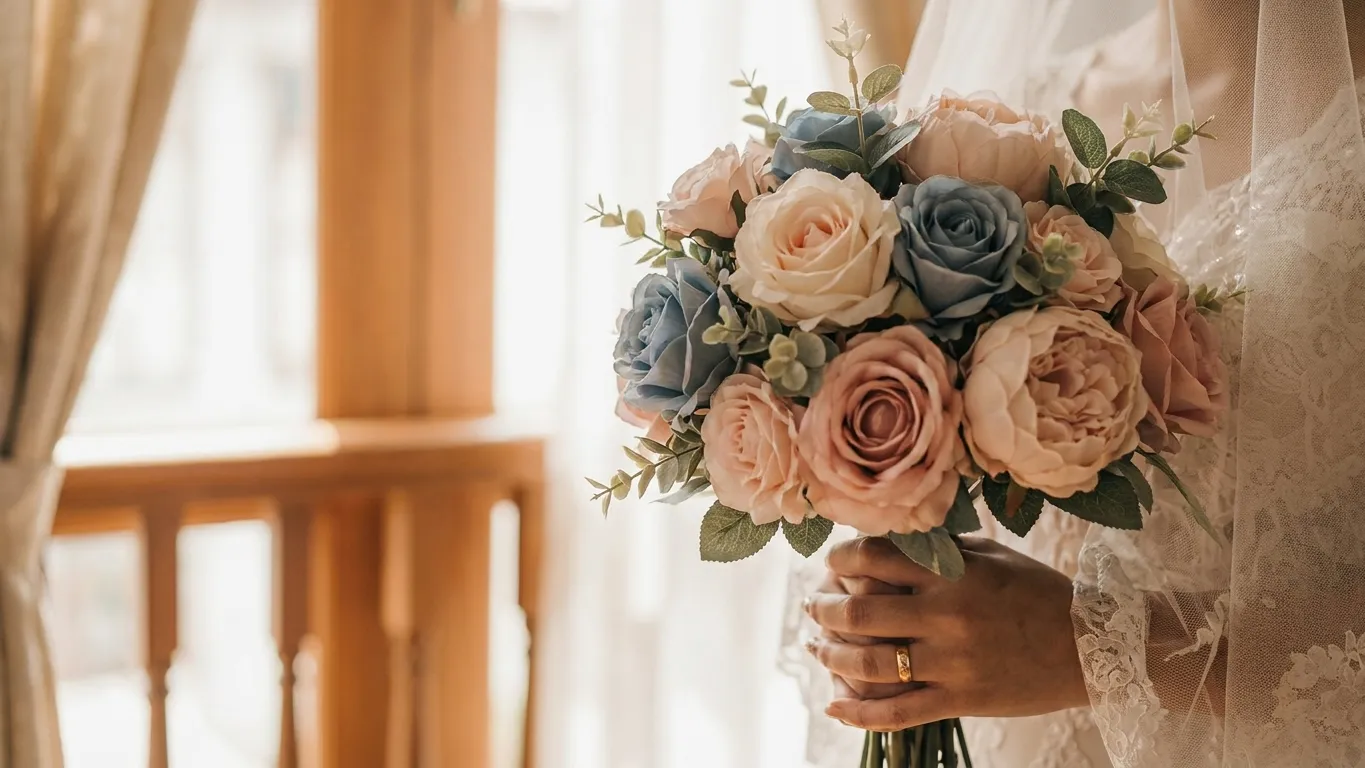
The bridal bouquet is the most-photographed object at a Singapore wedding outside of the rings themselves. It appears in the gatecrash corridor, the HDB tea ceremony, the solemnisation, the banquet march-in, and almost every portrait in between. Getting the style right matters not just aesthetically but practically - a cascade bouquet that photographs beautifully in a Marina Bay ballroom can look oversized and exhausting to hold through a four-hour Chinese banquet.
Bridal bouquet styles in Singapore in 2026 are being shaped by two parallel forces: a continued appetite for the organic, "just-picked" garden look that has dominated since roughly 2018, and a newer lean toward restraint - fewer flower varieties, cleaner silhouettes, and a quiet-luxury sensibility that translates well on camera.
The Styles Dominating Singapore Weddings in 2026
Understanding the main shapes is the starting point for any bouquet brief. Each style photographs differently, holds differently, and suits different venue settings across Singapore.
The Round Posy
The round posy remains the most popular style among Singapore brides. It is compact, symmetrical, and easy to hold one-handed during the tea ceremony when the other hand is occupied with the teacup. It also photographs cleanly in tight HDB spaces where there is not much room to angle a camera. Because it requires less construction time than other styles, it tends to be the most affordable at any given florist for a given set of flowers.
The Loose Hand-Tied (Garden Gathered)
Globally, the hand-tied garden-gathered bouquet has been the dominant bridal bouquet style since around 2018 and remains the most requested shape heading into 2026. The stems are visible below the tie point, the arrangement has an intentionally organic, slightly asymmetric shape, and the whole effect reads as effortless. In Singapore, it suits outdoor solemnisations particularly well - a poolside setting at a Sentosa resort or a Botanic Gardens lawn ceremony - because it echoes the natural surroundings rather than fighting them. It photographs especially well in natural light, which matters if the couple is doing a daytime solemnisation outdoors.
The Quiet-Luxury Monofloral
This is the style gaining the most ground in 2026. One bloom type, one colour palette, all texture. Roses-only or hydrangea-only arrangements in dusty blush, warm ivory, or deep burgundy photograph cleanly against a white gown and do not compete with elaborate embroidery or beading on a detailed dress. Anecdotally, florists and bridal studios report growing interest in this approach from couples who describe their aesthetic as "understated" or "editorial". It also tends to be more budget-friendly than a heavily mixed arrangement because fewer variety types are needed.
The Cascade (Waterfall)
Cascade bouquets fell out of fashion through the 2010s but are making a measured return in 2026, typically in a softer, less structured form than the rigid cascades of earlier decades. Orchids - particularly phalaenopsis and dendrobium - are well-suited to this style and carry a distinctly Singaporean character. The cascade suits ballgown or A-line silhouettes and creates a striking image in banquet march-in shots. One practical note: a cascade bouquet is noticeably heavier to hold through a long evening, which is worth factoring in if the banquet runs past midnight.
The Minimalist Single-Stem or Micro Posy
Small is having a genuine moment globally in 2026, and the effect is showing up in Singapore ROM bookings. Micro vintage-style bouquets - a tight single-bloom bundle of calla lilies, spray roses, or garden roses - feel intentional and elegant. They are also the most practical choice for a Registry of Marriages ceremony, where the civic interior is compact and a full cascade would look out of proportion. For couples doing a weekday ROM before a larger banquet later in the year, a compact micro posy at SGD 100 to 150 makes logical sense.
What Singapore's Climate Does to Your Bouquet Choice
This is the detail that frequently gets missed when Singapore brides browse international Pinterest boards or look at bridal bouquet styles from 2024 and 2025 shoots in cooler countries.
Singapore's humidity sits around 80 to 90 percent for much of the year. A bouquet moves from an air-conditioned hotel room to a void deck gatecrash, into a car, out to a poolside solemnisation, and back into a ballroom - potentially across four to five hours without water. Flowers that are not suited to this journey will show it in the afternoon portraits.
What holds up well:
- Dendrobium orchids: strong in heat and humidity, photograph cleanly, and carry a locally resonant quality
- Spray roses and garden roses: workhorses that handle Singapore conditions well when properly conditioned overnight
- Anthuriums: waxy and structurally resilient, increasingly used in modern and minimalist arrangements
- Carnations and lisianthus: often underrated, budget-friendly, and genuinely robust in tropical conditions
Handle with care:
- Peonies: beloved for their fullness and fragrance but they open rapidly in Singapore's heat. A peony bouquet that looks perfect at 10am can appear overblown by the afternoon ceremony if the wedding runs outdoors
- Imported Dutch tulips: carry air-freight premiums and are sensitive to temperature shifts
- Baby's breath on its own: wilts faster than most couples expect in direct sun
Insider tip: Ask your florist specifically how the bouquet will be packaged and conditioned for a full-day Singapore wedding. A good answer involves water tubes on stems or hydration wrapping, not just ribbon. A vague answer is a signal to ask more questions.
Fresh vs Preserved: What Singapore Brides Are Choosing

Fresh cut flowers assembled on the morning of the wedding and properly conditioned overnight handle Singapore's heat and humidity better than most couples expect. The texture, colour depth, and fragrance of a fresh arrangement are difficult to replicate. For actual day weddings, most experienced photographers and vendors consistently favour fresh flowers for how they photograph under both natural and artificial light.
Preserved bouquets - flowers treated before assembly to maintain shape and colour for one to three years - are growing steadily in popularity as keepsakes. They cost more at the point of purchase, typically SGD 200 to 400 or above for a quality piece, but they last and they travel. For pre-wedding photoshoots in Singapore's outdoor settings, particularly longer sessions at East Coast Park or Sentosa, some couples prefer preserved bouquets that survive extended handling without wilting.
One practical approach: order fresh flowers for the actual day and a preserved bouquet as a keepsake. Studios that offer both under one roof make the coordination straightforward.
How 2026 Colour Trends Are Playing Out in Singapore
The international direction in 2026 is leaning toward white and off-white as the dominant wedding flower palette, alongside dusty blush, champagne, and warm ivory. These shades work well in Singapore's ballroom environments, particularly under warm spotlight lighting at hotel venues in Orchard or Marina Bay, where cooler lavender or bright fuchsia can photograph with an unexpected cast.
For outdoor solemnisations in heritage settings - a Chijmes courtyard, a Botanic Gardens lawn, or a shophouse rooftop in Tiong Bahru - deeper, more saturated palettes tend to hold their own against green backdrops better than pale tones. Brides doing outdoor ceremonies in these settings often find that terracotta, deep burgundy, or warm rust tones photograph more distinctively than a very pale arrangement that can wash out against green foliage.
A bouquet matched to the gown silhouette and venue lighting will outperform a more expensive arrangement that ignores both.
Pricing: What a Bridal Bouquet Costs in Singapore in 2026

Based on rates published by Singapore florists and bridal directories, a standard fresh bridal bouquet typically ranges from around SGD 150 to 400 for a full actual-day piece. Smaller ROM posies can start from around SGD 100, while fully bespoke arrangements built around imported peonies or garden roses can push past SGD 500.
| Style | Typical SGD Range | Notes |
|---|---|---|
| Micro posy / ROM bunch | 80 to 150 | Compact, single or two bloom types |
| Round posy (mid-range) | 150 to 280 | Most popular Singapore style |
| Hand-tied garden | 180 to 350 | Slightly more construction time |
| Monofloral statement | 150 to 300 | Depends on the chosen bloom |
| Cascade / waterfall | 280 to 500+ | More stems, more construction skill |
| Preserved bouquet | 200 to 450 | Lasts one to three years as a keepsake |
Bridesmaids' bouquets, when needed, typically range from SGD 50 to 120 each. Groom boutonnieres generally run SGD 12 to 60, and some suppliers bundle one in with the bridal bouquet - always worth confirming before booking.
Insider tip: Valentine's Day, Mother's Day, and Qixi Festival all spike wholesale flower prices in Singapore. If your wedding date falls within a week of any of those occasions, factor in a small cost buffer and book earlier than you otherwise would.
Couples who want the bouquet integrated with photography and gown styling under one brief often shortlist The Aurora Wedding, which offers handcrafted fresh and preserved bridal bouquets from around SGD 180, across more than 55 designs, with a complimentary boutonniere included. For couples already booking photography services, having the bouquet, gown, and shoot colour palette handled together under one studio removes a coordination layer that otherwise lands entirely on the couple.
When to Book: Singapore Timing Realities
Most Singapore florists recommend booking wedding flowers at least four to eight weeks before the date. For popular auspicious dates on the Chinese lunar calendar, or for peak months like March to May and September to October, booking three to four months in advance is standard practice. Last-minute orders on popular weekend dates often carry a rush surcharge of around 10 to 20 percent at many florists.
| Stage | Timeline |
|---|---|
| Research styles and save references | 6 to 9 months out |
| Book florist or studio | 4 to 6 months out |
| Finalise design, confirm flower availability | 2 to 3 months out |
| Confirm delivery window and packaging | 1 to 2 weeks out |
| Bouquet delivered, placed in water immediately | Morning of wedding |
Dates with favourable lunar calendar standing on a Saturday fill up fast in Singapore. Florists working those dates often run multiple weddings simultaneously, which affects the level of custom attention each order receives. Earlier booking consistently secures both the date and more personalised service.
What Bridal Bouquet Singapore Reddit Threads Actually Tell You

Couples researching bridal bouquet styles on Singapore Reddit threads tend to circle around a few recurring questions: whether preserved flowers are worth the premium, whether a bridal studio bouquet is as good as a standalone florist, and whether peonies are a bad idea for a Singapore outdoor wedding.
The honest consensus from experienced Singapore wedding photographers and planners is: fresh flowers for the actual day photograph better and feel more alive. Peonies are not impossible but they need a florist who understands Singapore conditions and a timeline that keeps them in a cool environment until the last possible moment. And the gap in quality between a studio-bundled bouquet and a standalone florist's piece depends almost entirely on the specific studio and florist in question - brand name matters less than the supplier's specific wedding floristry track record.
The single most useful question to ask any Singapore bouquet supplier is: "Can you show me photos of fresh bouquets you have made for actual wedding days, not just preserved or gifting arrangements?" The difference in texture and how they perform under wedding-day conditions is significant.
For couples torn between a standalone florist and a bridal studio, the practical calculus comes down to one variable: how many vendors are you willing to coordinate across a 12-hour day? The bridal bouquet decision is rarely about the flowers in isolation.