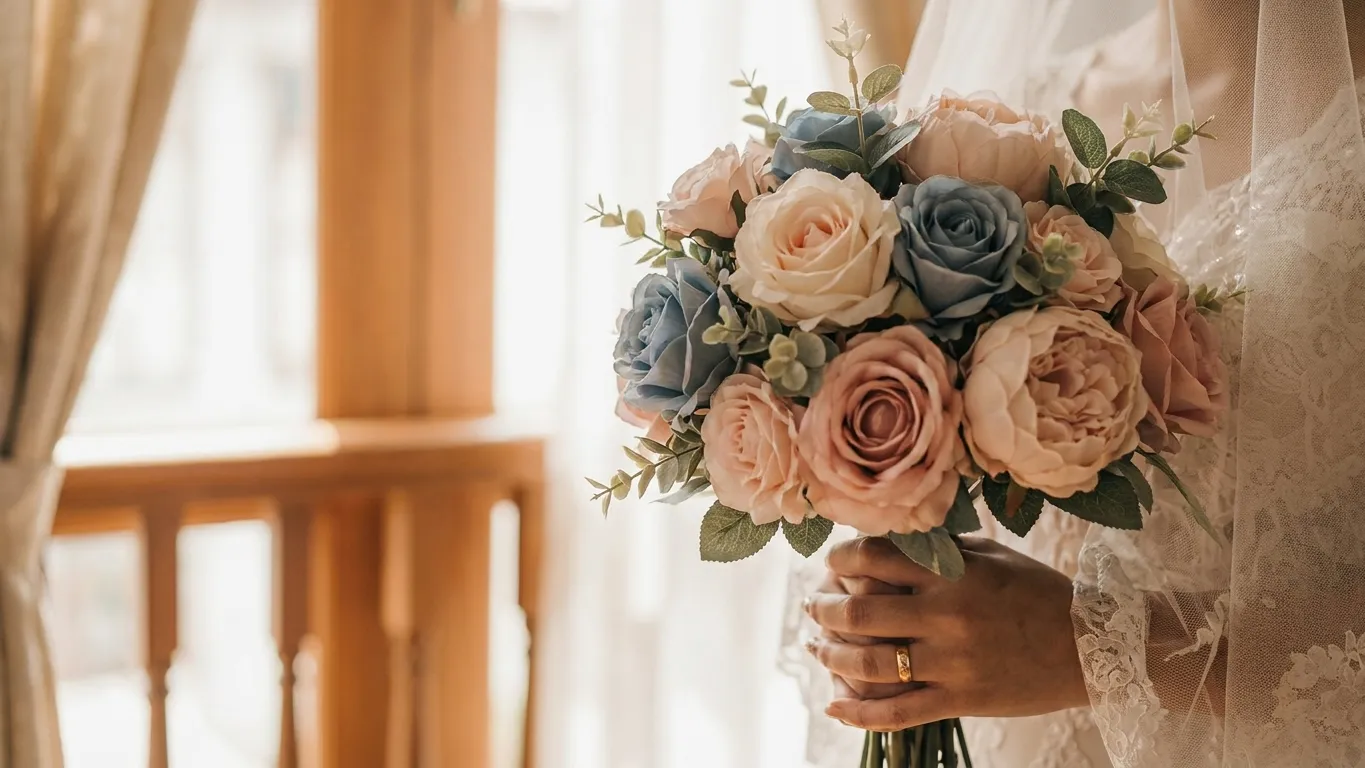
Real flower arrangements for weddings carry a texture, fragrance, and light-catching quality that preserved or silk alternatives cannot fully replicate. For Singapore couples, the decision is more nuanced than just aesthetics: humidity, a 12-hour event day, and the air-conditioning swings between venues all affect which blooms hold up and which wilt by the time the banquet begins. This guide covers every practical dimension, from bouquet styles and flower choices to pricing, booking timelines, and the climate realities nobody tells you about at the first consultation.
Why Real Flowers Still Win on the Actual Day
A preserved bouquet photographs acceptably in controlled studio light. Under the warm spotlights of a Marina Bay ballroom or the afternoon sun at a Sentosa poolside solemnisation, real flowers behave differently. Petals catch light softly. A peony or garden rose has a dimensionality and natural variation that a preserved bloom often loses over time. Fresh flowers also carry fragrance, which is part of the sensory memory couples and their guests associate with the ceremony.
The Singapore wedding day is long. A typical timeline runs from a 7am or 8am gatecrash at an HDB flat in Tampines or Jurong, through a tea ceremony, a mid-morning solemnisation, a lunch break, and finally a 7pm banquet. A fresh flower arrangement assembled the morning of the wedding and properly conditioned overnight handles that journey better than most couples expect, provided the florist has accounted for Singapore's conditions.
The most expensive mistake in wedding florals is not overspending on peonies. It is underspending on expertise and then opening a box of wilted flowers at 7am.
Bouquet Styles and Which Suits Your Day
Choosing a bouquet style is not purely aesthetic. The shape and density of an arrangement affects how heavy it feels after two hours, how it photographs against different gown silhouettes, and how well it survives being set down on a reception table between ceremony moments.
Classic Round Bouquet
Tight, symmetrical, and versatile. Roses, hydrangeas, and ranunculus are popular choices for this shape. It works well against most gown silhouettes and photographs cleanly in both close-up and full-length shots. The compact form also holds up reasonably well in the heat.
Cascading Bouquet
A flowing, downward-trailing arrangement that suits A-line and ballgown silhouettes. More visually dramatic in photographs but heavier to hold through a long ceremony. Florists typically use sturdier stems like orchids or greenery at the trailing ends to keep the cascade intact through a warm Singapore afternoon.
Garden or Loose-Tied Bouquet
An organic, loosely assembled style that feels gathered rather than constructed. This shape currently trends toward softer, warmer palettes: dusty blush, warm ivory, muted peach, and earthy terracotta tones. It photographs with movement and a relaxed quality that suits outdoor solemnisations at heritage gardens or open-air venues.
Posy or Compact Bouquet
A smaller, simplified version of the round bouquet. Ideal for ROM ceremonies, pre-wedding photoshoots, and bridesmaids. Easier to hold for extended periods and generally more budget-friendly.
Flower Box Arrangement
Not a traditional carry bouquet, but increasingly popular as a reception piece or second look. A box arrangement can double as a table prop during the photoshoot and a display item at the reception table.
What Flowers Work in Singapore's Climate

Singapore's humidity sits around 80 to 90 percent for much of the year. Flowers move from air-conditioned storage into outdoor heat and back again repeatedly across a wedding day: the gatecrash corridor, the car ride to the venue, the poolside solemnisation, the hotel ballroom. Not all blooms handle those swings equally.
| Flower | Heat Tolerance | Notes for Singapore Weddings |
|---|---|---|
| Orchids (Phalaenopsis, Vanda) | High | Hardy, long-lasting, suitable for outdoor arrangements and car decor |
| Roses | Moderate | Choose garden or spray varieties; condition overnight before the day |
| Hydrangeas | Low to moderate | Beautiful but thirsty; best in air-conditioned indoor settings |
| Carnations | High | Often underrated; affordable and durable through long days |
| Ranunculus | Moderate | Delicate and photogenic; best kept cool until the ceremony |
| Peonies | Low | Stunning but sensitive to heat; book early as supply is limited |
| Garden roses | Low to moderate | Focal blooms; use sparingly to let each stem stand out |
| Greenery and foliage | High | Eucalyptus, ferns, and tropical leaves anchor arrangements through the heat |
Singapore florists often recommend hardy orchids and preserved elements for bridal car decorations and outdoor arches, reserving more delicate peonies and garden roses for air-conditioned ballroom settings.
Insider tip: Ask your florist specifically how they condition fresh flowers before delivery. Stems that are properly hydrated and refrigerated overnight perform significantly better in Singapore's heat than stems delivered the same morning they are cut.
What Real Flower Arrangements for Weddings Cost in Singapore
Pricing in Singapore's wedding florist market varies widely depending on bloom selection, bouquet complexity, and whether the order is part of a larger floral package.
| Item | Typical Price Range (SGD) |
|---|---|
| bridal bouquet (fresh, standard) | 150 to 400 |
| Bridal bouquet (bespoke, premium blooms) | 400 to 700 |
| ROM or solemnisation posy | 100 to 220 |
| Groom boutonniere | 25 to 60 |
| Bridesmaid bouquet | 80 to 180 |
| Wedding arch (fresh flowers) | 1,500 to 3,500 |
| Table centrepieces (per table) | 80 to 250 |
| Full venue floral styling | 3,500 and above |
A few things push prices toward the higher end. Peonies and garden roses are among the pricier choices because of their demand and delicate nature. Imported stems cost more than locally available varieties. Auspicious dates on the Chinese calendar and peak wedding months, generally March to May and September to October, tend to push prices up across most suppliers.
Couples who book their bridal bouquet as part of a broader wedding package, such as through a bridal studio that bundles photography with floral accessories, sometimes find the per-item cost more competitive than sourcing each vendor separately. The Aurora Wedding, for example, offers handcrafted fresh and preserved bouquets from around S$180, across 55+ designs, with free boutonnieres included. That kind of bundled approach appeals to couples who want fewer separate suppliers to coordinate on the actual day.
Booking Timeline: When to Lock In Your Florist

The timing question is one many couples get wrong. A solemnisation posy or simple bouquet for a weekday ROM can sometimes be arranged with a few weeks' notice. An actual day arrangement involving a bridal bouquet, bridesmaids' posies, boutonniere, car decor, and venue flowers requires more runway.
- 6 to 8 weeks out - Minimum recommended lead time for a standalone bridal bouquet from most Singapore florists.
- 3 to 4 months out - Recommended for full venue floral styling, or any popular auspicious Saturday date. Dates with favourable lunar calendar standing fill fast, and florists working those dates often run multiple weddings simultaneously.
- Share references early - Bring a Pinterest board or reference photos to the first consultation. Ask specifically to see photos of fresh flower arrangements the florist has made, not just preserved or silk examples.
- Confirm boutonniere inclusion - Some packages include the groom's boutonniere; others price it separately at SGD 25 to 60. Clarify this upfront.
- Get the delivery window in writing - Confirm what time flowers will arrive on the wedding morning and who receives them if the bride is occupied with makeup.
Insider tip: Florists running auspicious-date Saturdays often service several weddings simultaneously. Booking 3 to 4 months out is not excessive for those dates, it is standard practice among experienced Singapore wedding planners. A florist with six weddings on the same Saturday is splitting attention six ways.
Real Flowers Across the Singapore Wedding Day
Different moments in a Singapore wedding call for different floral thinking.
Tea ceremony - Typically held indoors at an HDB flat or shophouse under warm LED lighting. The bouquet is held, set down, and picked up multiple times. A compact round or garden bouquet holds up best. Garish or overscaled arrangements distract from the ritual rather than enhancing it.
Gatecrash - Happens in corridors, void decks, or at lift landings. The bouquet is often not in the bride's hands during this phase. Make sure it is stored upright in water if the florist delivers it early.
Solemnisation - The most photographed moment. This is where the bouquet earns its cost. For outdoor Sentosa or Botanic Gardens ceremonies, heat-hardy blooms in the outer ring of the arrangement matter. For indoor hotel settings, you have more freedom with delicate varieties.
Banquet - The bouquet typically plays a supporting role on the high table. Fresh flower table centrepieces for the banquet hall should be confirmed with the hotel coordinator, as many venues have in-house florist arrangements bundled into the banquet package that may not match your aesthetic.
The Preserved vs. Fresh Trade-Off

Preserved and silk bouquets have genuine advantages. They are zero-stress for a pre-wedding photoshoot in Bali heat, they survive a long journey, and they can be kept as a keepsake. Many couples choose a preserved bouquet for the pre-wedding shoot and a fresh flower arrangement for the actual wedding day.
For the actual day ceremony, though, fresh flower arrangements carry a quality that photographs and films differently from any substitute. The light interaction, the soft texture, the natural variation petal to petal: these details matter more in videography than couples often expect until they see the footage.
Studios offering both options, such as The Aurora Wedding's bridal bouquet service, give couples flexibility to use preserved blooms for the photoshoot and fresh flowers for the solemnisation, without having to source two separate suppliers.
2026 Floral Trends Worth Knowing
Trends are secondary to your gown and venue palette, but knowing the direction helps couples avoid choices that date quickly in photographs.
- Warm, earthy palettes are replacing high-contrast colour combos. Dusty blush, warm ivory, muted peach, terracotta, and clay tones are showing strongly in bridal consultations.
- Orchids with an editorial edge are trending for couples wanting a modern, sculptural look. Phalaenopsis and other varieties align well with the architectural design direction popular in 2026.
- Garden roses used sparingly as focal blooms rather than packed in for volume. Fewer stems, more visual impact per stem.
- Sculptural foliage as a feature, not just filler. Tropical leaves and structured greenery are becoming design elements in their own right, which suits Singapore's natural environment.
- Baby's breath used sparingly as texture, not as a primary flower. Clouds of it read as dated now; a few stems for accent still work.
For photographers and videographers, the practical implication is that arrangements with movement, texture, and varied petal heights film better than flat, uniform designs. A loosely assembled garden bouquet with layered blooms gives the camera something to find in close-up. A perfectly symmetrical round bouquet is safer but less cinematically interesting.
How to Brief Your Florist Like a Pro
A clear brief saves time, money, and the painful late-night message three days before your wedding asking whether your bouquet can be "a bit more ivory".
- Share your gown colour and fabric. A florist who cannot see your dress cannot match your palette accurately.
- Specify your venue lighting. Ballrooms with warm spotlights, outdoor garden solemnisations, and daylit hotel function rooms cast different tones on the same bouquet.
- Name your must-have blooms and your hard no's. Pollen allergies matter. Some flowers are also traditionally avoided at Chinese weddings; confirm with your florist if you are unsure.
- Set a realistic per-item budget before the consultation, not after. It saves both parties time.
- Ask for a physical sample or a detailed mood board before final confirmation on premium arrangements.
Couples who approach the bridal bouquet as an afterthought, sorted in the final two weeks, consistently end up with fewer options and higher prices for the same blooms.
---
The shareable truth about real flower arrangements for weddings: the bouquet that holds up through a Tampines gatecrash, a poolside solemnisation, and a 9pm banquet is not the cheapest one on the florist's website. It is the one built by someone who has done all three in Singapore's heat before, and knows exactly which stems to reach for.