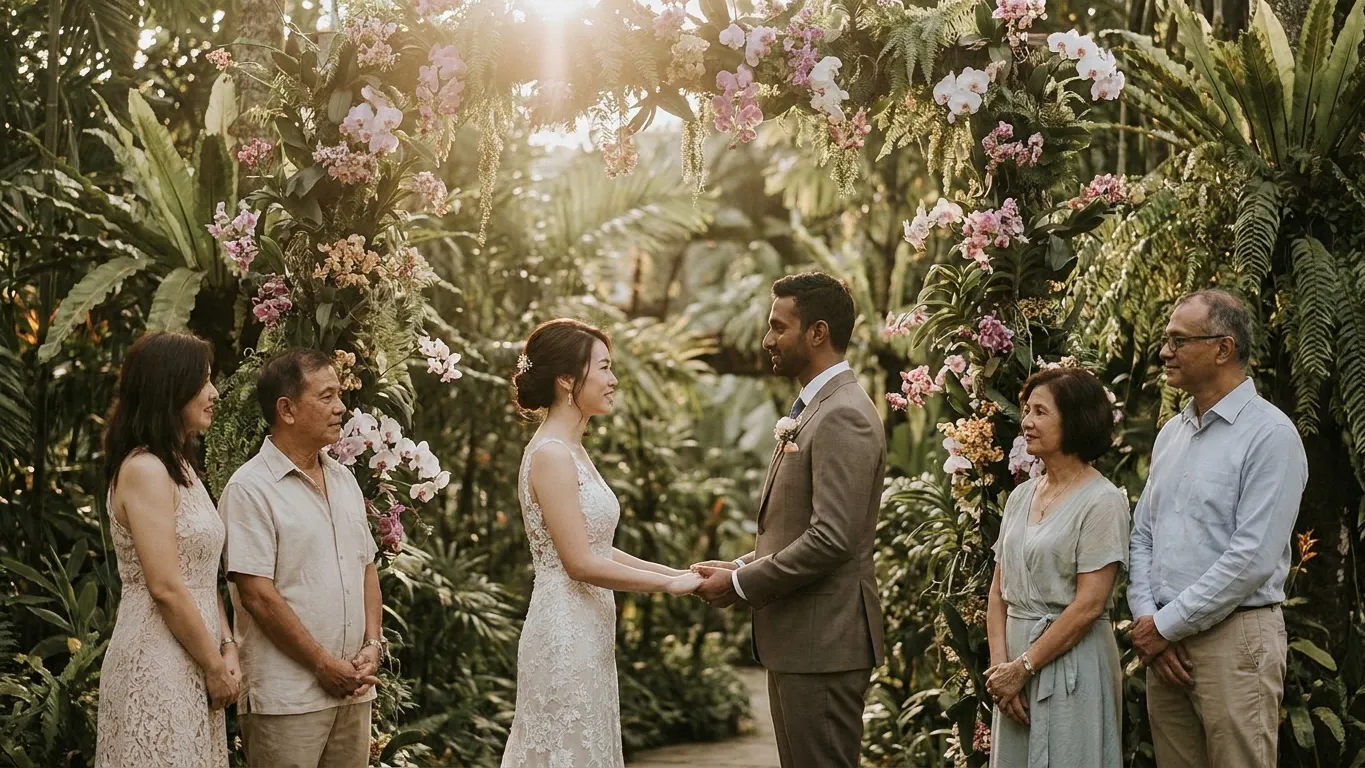
Singapore's Registry of Marriages (ROM) has seen significant shifts in its processes, particularly concerning marriage certificates and their associated updates. For couples in Singapore, understanding how marriage records are managed and what changes are permissible is crucial, especially when other official documentation, such as for HDB or ICA purposes, is involved.
Marriage Records Are Historical Archives
The State Marriage Register, maintained by the Registry of Marriages, is designed to be a historical record of a marriage at the time of solemnisation. This means that details captured during the registration are generally not updated post-solemnisation. If a name change occurs after marriage, such as through a deed poll, couples typically need to present a combination of documents to relevant organisations like HDB or ICA.
This usually involves showing your previous identification document (which bears the same number as your marriage certificate), your deed poll reflecting the new name, and your current identification document with the updated name. The original marriage certificate itself remains as historical proof of the union, rather than a document that can be amended to reflect subsequent personal status changes.
This approach ensures the integrity of historical marriage records while still providing mechanisms for official bodies to verify identity and current personal details. It is a common procedure that streamlines the process for individuals who undergo name changes for various reasons.
Digital Certificates and Their Implications

Recent advancements have introduced digital marriage certificates, fundamentally changing how couples receive and use proof of their union. Since September 25, 2023, eligible couples registering their marriage online through the enhanced Our Marriage Journey portal receive a digital certificate via email. This digital document holds the same legal standing as a physical certificate.
This digitalisation streamlines the process, eliminating the need for in-person visits to the ROM for declarations and document verification for many first-time marrying Singaporeans and permanent residents aged 21 and above. Details are often auto-filled using Singpass, making the application more convenient. Couples can also opt for a ceremonial certificate to sign as a keepsake during the solemnisation, which they can customise and print themselves or obtain from the ROM.
For couples who registered their marriage before the digital rollout but had their documents verified afterwards, digital certificates are also issued. The Registry of Muslim Marriages (ROMM) also began issuing digital certificates in 2024. For official purposes where a certified search record is needed, it can be applied for separately via marriage.gov.sg.
The HDB Application Connection

Many couples time their marriage registration with their HDB flat applications. It's important to note that the legal marriage date, as recorded on the marriage certificate, is what triggers HDB eligibility timelines, not necessarily the date of application or solemnisation. To ensure maximum flexibility and to align with HDB requirements, couples are advised to file their Notice of Marriage as early as the 6-month window allows.
This allows ample time for the solemnisation and ensures that the correct legal marriage date is established, which is crucial for HDB BTO application eligibility and other related property matters. Should there be any amendments needed for solemnisation details like date, time, venue, or witnesses after filing, these can typically be made via the OMJ portal up to 5 days before the appointment for a small fee, provided the revised date is within the original application's 6-month validity.
Navigating Name Changes and Documentation

While the marriage certificate itself isn't updated to reflect a name change, managing official documents requires presenting the deed poll alongside your current and previous identification. This is a standard practice that allows various government agencies to reconcile identity changes. Understanding this process beforehand can save couples considerable time and reduce potential stress when dealing with administrative tasks post-marriage.
Given the evolving digital landscape and the procedures for managing official records, staying informed about the latest guidelines from sources like marriage.gov.sg is always recommended. The shift towards digital certificates signifies a move towards greater efficiency and convenience for couples navigating this significant life event in Singapore.