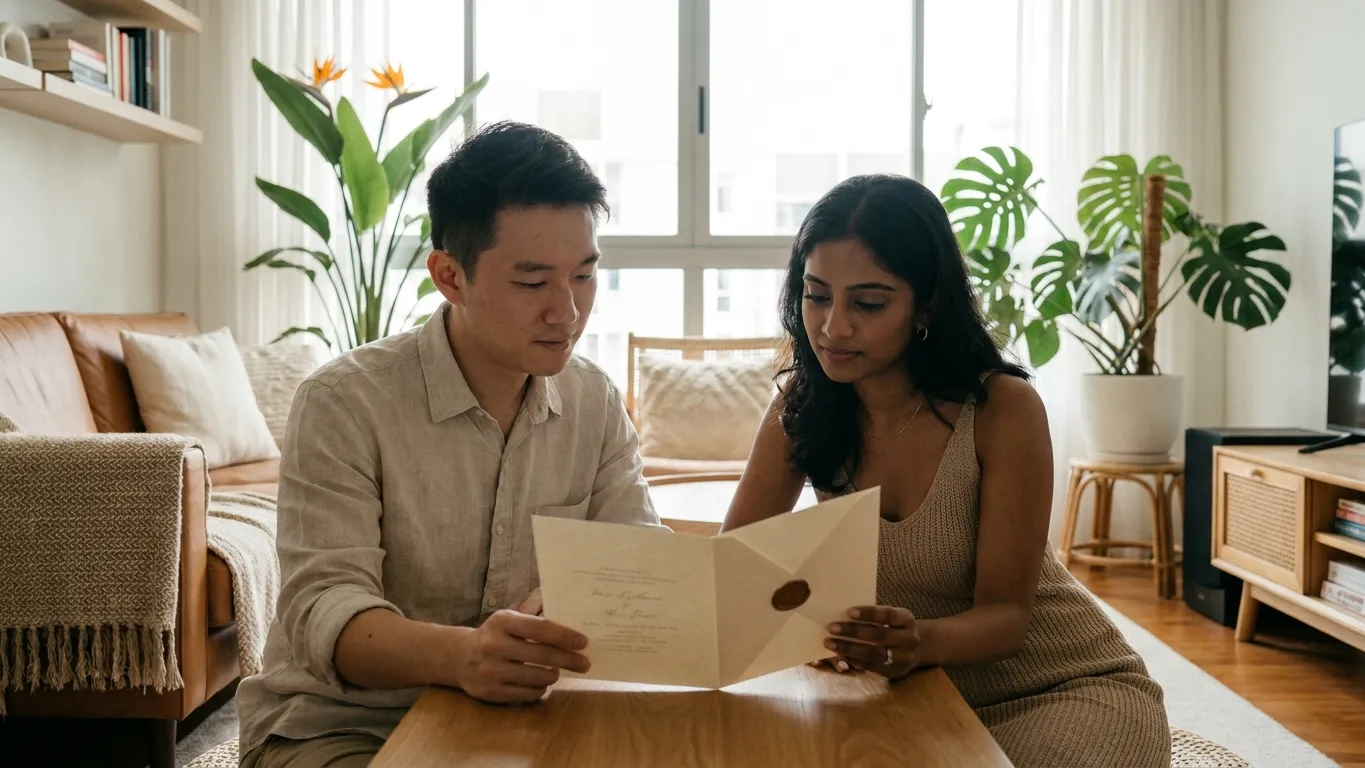
Most couples spend months choosing a gown and an afternoon choosing an emcee. That mismatch costs them on the night. A good wedding emcee in Singapore does far more than read names off a script, they hold the room together through a gatecrash delay, a parent's speech that runs long, and the gap between the tea ceremony and the march-in that always seems to stretch. Get the choice right, and guests barely notice the transitions. Get it wrong, and those transitions become the story people retell.
These five tips come from observing what consistently separates a smooth Singapore wedding reception from a stilted one.
---
1. Match the Language to the Room, Not to Yourself
Language fit is the single most under-weighted factor in Singapore wedding emcee decisions. Couples often default to an emcee who speaks the languages they are comfortable in, rather than the languages the guests actually need. A primarily English-speaking couple whose parents-in-law grew up speaking Hokkien at home will find that an English-only emcee loses half the room the moment the tea ceremony recap begins.
Singapore weddings regularly span two or three dialect generations under one ballroom roof. An emcee who can pivot smoothly between English, Mandarin, and a working dialect, Hokkien, Cantonese, or Teochew, keeps elderly relatives engaged and reduces the awkward silence that opens up when one half of the room doesn't follow what's being said. Before shortlisting, map your guest list by language group. Then match the emcee to that map, not to your own preference.
Insider tip: Ask the emcee to demonstrate a dialect segment specifically. Some bill themselves as bilingual and mean English-Mandarin only. Dialects are a separate skill, and the gap between claiming it and delivering it fluently mid-reception is wide.
---
2. Watch a Wedding Clip, Not a Corporate Showreel

Most emcees maintain polished demo reels, and most of those reels are cut from corporate product launches, gala dinners, and brand activations. These events have a very different pace, crowd dynamic, and emotional register from a Chinese banquet in Jurong or a hotel ballroom solemnisation on Orchard Road.
Wedding pacing is irregular by design. There is a dim sum lunch lull where the crowd is distracted, a cake-cutting that depends on the photographer's position, a parent speech that nobody knows how to end. The question is whether the emcee you are watching can handle those unscripted pauses with grace, not whether they can deliver polished lines to a seated corporate audience. Ask specifically for footage from a wedding reception, preferably at a venue type similar to yours. A clip from a Chinese banquet tells you far more than a highlight reel from a Marina Bay product launch.
Insider tip: Watch how the emcee handles the yum seng. It is one of the highest-energy, least-scripted moments of a Singapore Chinese wedding. An emcee who builds it naturally rather than mechanically is showing you their real skill level.
---
3. Build a Buffered Timeline and Share It Three Weeks Out

The most expensive hour of a Singapore wedding is the one nobody budgets for: the gap that forms when the gatecrash runs over, the bridal party arrives late from the hotel lobby, or a speech runs long. A professional emcee does not just read a programme, they actively manage time, communicate with the banquet manager, signal the photographer, and buy graceful minutes when the kitchen needs them.
For this to work, the emcee needs the full programme at least two to three weeks before the wedding, not the week before. That timeline should include realistic buffers: ten to fifteen minutes for the march-in, a clear agreed cutoff for each speech, and the venue's hard stop time for the kitchen. An emcee who receives the programme the day before the wedding cannot do this job properly, no matter how experienced they are.
The rundown should also flag cultural sequencing. For a Chinese wedding, the march-in order, the yum seng timing, and the tea ceremony position in the programme all carry meaning that an informed emcee will protect. For a Malay wedding, the sanding and bersanding segments have their own pacing. Share these details early and in writing.
---
4. Check the Venue Acoustics Before the Day

Many Singapore hotel ballrooms have audio blind spots that catch out first-time emcees. A pillar-heavy heritage ballroom on Orchard Road, a split-level function space in Marina Bay, a void deck covered pavilion in Tampines, each has a different acoustic profile, and an emcee who has never stood at that microphone before will spend the first twenty minutes calibrating rather than hosting.
Ask whether the emcee has worked the specific venue before. If not, a brief walk-through on a quiet afternoon is worth requesting, most professional emcees will build this into their prep as a matter of course. Check also whether the emcee brings their own wireless microphone or relies on the venue's house system. House systems vary enormously in quality, and a professional who travels with their own backup microphone is insured against the sound desk problems that happen at roughly one in four Singapore wedding receptions.
For outdoor segments, a Botanic Gardens lawn solemnisation, a Sentosa cliff-top photoshoot reception, a rooftop dinner in Bukit Timah, wind and ambient noise change the entire audio equation. These settings need a different vocal technique and ideally a directional microphone setup. Confirm this with the emcee before signing.
---
5. Read the Overtime Clause Before You Sign Anything
Singapore wedding emcee packages typically run from around SGD 588 to SGD 1,088 for a standard banquet at the mid-range, with entry-level hosts starting closer to SGD 500 and highly sought-after or celebrity-tier emcees commanding SGD 3,000 and above. Most packages are priced for a defined duration, commonly the tea ceremony and the banquet, and carry overtime charges for anything beyond the agreed end time.
Overtime billing is generally structured in half-hour increments, and the rates are real. Clarify the overtime rate in writing before the contract is signed, and ensure the venue's hard stop time is at least thirty minutes before the emcee's contracted end time. Singapore Chinese banquets in particular have a reputation for running past midnight when the kitchen closes late, the speeches overrun, and the karaoke segment nobody planned for appears after dessert.
Also check what is included in the base rate. Some packages cover scriptwriting, bilingual announcements, game facilitation, and basic AV support. Others quote hosting only, with every add-on billed separately. Packages that cover both the tea ceremony and the dinner banquet may include a small supplement, confirm this number is locked in the contract, not left as a verbal estimate.
Insider tip: Book at least three to four months ahead of a weekend wedding date. Popular emcees in Singapore fill their calendars quickly during the June to August season and again in November and December. The pool of available hosts narrows considerably within eight weeks of a peak-season Saturday.
---
Quick-Reference Summary
| Tip | Best for | Key action |
|---|---|---|
| Language match | Multicultural guest lists | Map guest languages, test dialect fluency |
| Watch a wedding clip | All couples | Request banquet footage, not corporate reels |
| Buffered timeline | Long or complex programmes | Share full rundown 2 to 3 weeks out |
| Venue acoustics check | Hotel ballrooms, outdoor venues | Confirm prior venue experience or arrange walk-through |
| Overtime clause | Any contracted emcee | Read and lock the rate in writing before signing |
---
"The emcee who got rave reviews at a corporate gala may freeze at a tea ceremony recap. Always ask for wedding footage specifically."
For couples building the rest of their vendor shortlist around the same criteria, specificity, local fluency, and contract clarity, the same logic applies to photography and video. Studios such as The Aurora Wedding offer combined wedding photography and videography packages from around SGD 1,988 for eight hours of actual-day coverage, which removes one more coordination touchpoint for couples already managing a complex vendor list. Whether that bundled approach suits a given couple depends on their priorities, but the emcee selection framework above applies regardless of which photography path they choose.