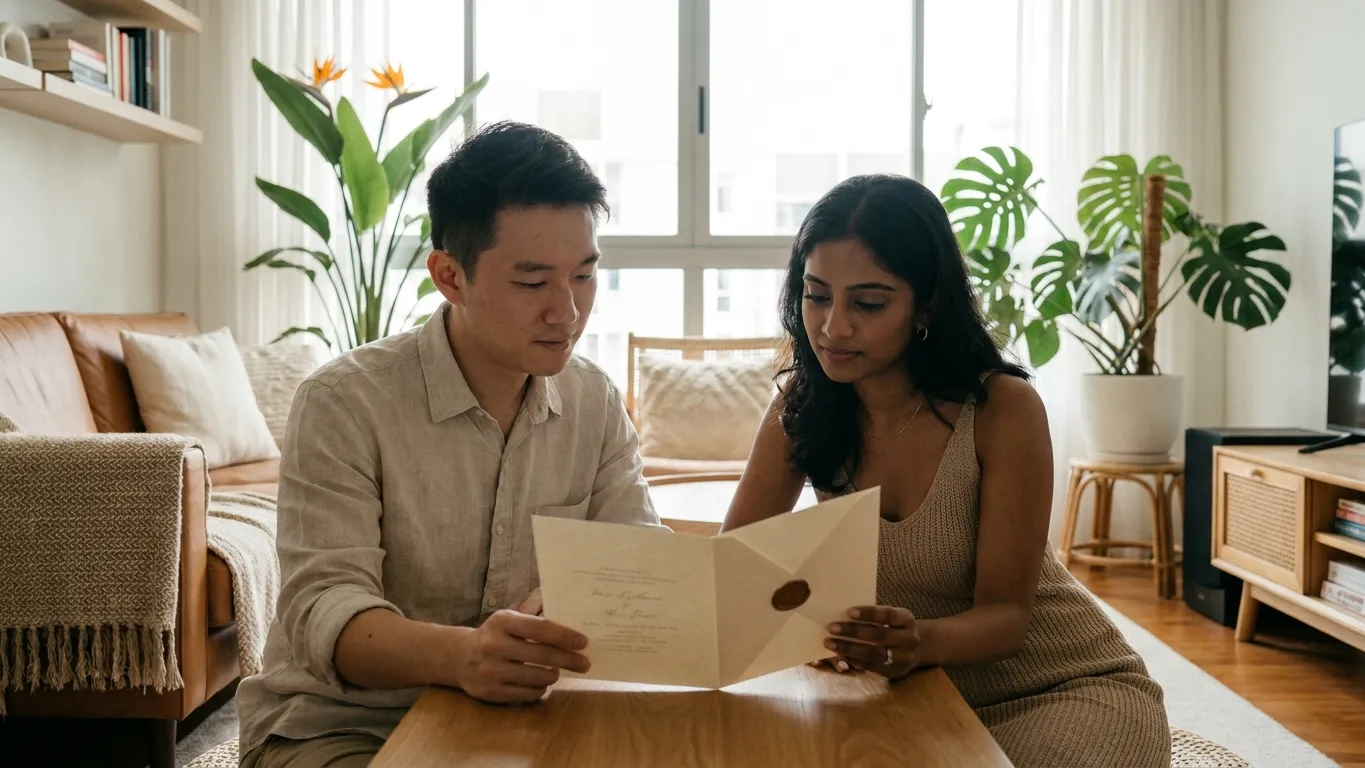
Most people who attend an Indian wedding in Singapore for the first time say the same thing: they didn't realise how much was happening before the actual ceremony. That is the point. Traditional Indian marriage customs treat the wedding not as a single event but as a sequence of rituals that build meaning over several days, drawing both families deeper into the celebration at each step.
Singapore's Indian community numbers well over 300,000, and the wedding traditions practised here span Hindu, Muslim, Sikh, and Christian backgrounds, as well as distinct regional styles from South India and North India. What follows is a plain-language guide to the major customs most couples and guests will encounter.
---
The Pre-Wedding Phase: Days of Preparation
Long before the ceremony morning, the celebrations are already underway. Pre-wedding rituals serve a practical and a spiritual purpose: they prepare the couple, bless the union, and bring both families together in a shared space.
Roka and Puja
Among many North Indian families in Singapore, the formal engagement begins with the roka ceremony, held in the presence of a priest. Both families confirm the proposed marriage and the groom's family presents gifts to the bride's side. Separately, a puja is typically conducted at least two weeks before the wedding, where the couple and their families seek blessings and protection for the upcoming union. Some families also observe vratham, a period of fasting believed to strengthen the blessings received.
Haldi (Pithi)
The haldi ceremony is an intimate, often joyful ritual held at home rather than a formal venue. Turmeric paste is applied to the bride and, in many North Indian traditions, the groom as well, as a purification and beautification rite. Because it is messy by nature, it suits a home setting and usually draws only close family. It is not a fire ritual, but it carries real emotional weight as one of the last moments the bride spends as a single woman in her family home.
Mehndi
The mehndi session typically follows the haldi. The groom's family visits the bride's home and presents her with bangles. A professional henna artist then decorates the bride's hands and feet in elaborate patterns that can take several hours. There is a widely held belief that the darker the henna stain, the deeper the love in the marriage, which explains why every bride is quietly rooting for a rich, deep colour. The mehndi gathering is women-centred and celebratory, and in Singapore it often doubles as a pre-wedding party.
Sangeet
The sangeet is a lively evening of music and dance where both families come together to perform and celebrate. It is festive and non-religious, making it well-suited to a hotel ballroom or event hall with a stage and sound system. North Indian families in Singapore tend to stage more elaborate sangeet performances, sometimes with choreographed Bollywood-style routines. South Indian celebrations are typically more moderated in tone, though the joy is identical.
Insider tip: Temple bookings in Singapore for morning muhurtham slots fill up 12 to 18 months in advance, particularly for auspicious dates. Lock in the temple date before finalising the sangeet or reception venue, the sacred ceremony drives everything else on the timeline.
---
The Wedding Ceremony
South Indian (Tamil-Hindu) Weddings
For most Tamil Hindu families, the wedding ceremony centres on the muhurtham, the auspicious time window set by a priest. The ceremony is typically held in a temple, where the priest conducts the rites in Tamil and Sanskrit. According to Singapore's National Heritage Board documentation, Tamil Hindu weddings in Singapore usually take place in a temple where a priest officiates the ceremony and conducts the ceremonial rites.
The emotional peak of the ceremony is the thali tying. The thali is a gold pendant, the primary symbol of marriage in South Indian tradition (equivalent to the mangalsutra in North Indian custom). The groom places the thali around the bride's neck as the music swells, garlands are exchanged, and guests shower the couple with saffron rice as a blessing. It is one of the most photographed moments of any Indian wedding.
Following the thali tying, the saptapadi takes place. The couple walks around the sacred fire, the agni, three times, throwing a handful of grains into the flames at each circuit. During this, they recite the seven wedding vows: each vow representing a different aspect of married life, covering nourishment, strength, prosperity, happiness, progeny, health, and friendship. The groom also places toe rings, called metti, on the bride's toes as a further marker of married status.
The bride wears a silk saree, typically in a vibrant colour. Bright colours symbolise good luck; white and black are avoided. The groom traditionally wears a dhoti.
North Indian Weddings
North Indian weddings in Singapore, Punjabi, Gujarati, Rajasthani, and others, typically feature the baraat, the groom's procession to the wedding venue. This is a lively, music-filled arrival sometimes accompanied by a dhol drummer. The baraat is a crowd-pleaser and, practically speaking, it signals to the entire venue that the ceremony is about to begin.
The main Hindu ceremony centres on the pheras, the couple's walk around the sacred fire. The kanyadaan, where the bride's father gives her away, is another significant ritual. The seven vows of the saptapadi are recited, each step carrying its own meaning. The mangalsutra, the North Indian equivalent of the thali, is placed around the bride's neck by the groom.
Punjabi weddings may also incorporate the chooda ceremony, where the bride receives a set of red and white bangles from her maternal uncle. These bangles symbolise purity and marital prosperity and are typically worn for a set period after the wedding.
Muslim Indian (Nikah) Weddings
For Muslim Indian families in Singapore, marriage is registered through the Registry of Muslim Marriages (ROMM), not through the civil ROM process. The nikah ceremony serves as the legal marriage registration. Dietary requirements at the reception are governed by halal standards, which shapes the catering arrangements considerably.
---
The Civil Registration Requirement

This is a point that catches some couples off guard, particularly those planning their first wedding. In Singapore, a religious or cultural ceremony alone does not make a marriage legal. For non-Muslim couples, the civil solemnisation through the Registry of Marriages is a separate and mandatory step. According to marriage.gov.sg, the Notice of Marriage application fee is SGD 42 where at least one party is a Singapore Citizen or Permanent Resident. The application must be filed at least 21 days before the intended solemnisation date and can be submitted up to 6 months in advance.
As of 2026, the original ROM building at Canning Rise is closed for redevelopment and is not expected to reopen until 2029. In-person appointments and ROM-site solemnisations are currently held at the interim site at Level 3, Esplanade Mall. Always check marriage.gov.sg for the current location before travelling.
Insider tip: If flexibility exists, a weekday morning slot at the interim Esplanade Mall venue tends to be quieter than a Saturday morning, which fills quickly and brings additional foot traffic from the surrounding Esplanade area.
---
The Wedding Feast and Reception
Once the ceremony concludes, both families and guests gather for a feast. Traditionally, guests sat on the floor and ate with their hands from banana leaves, and some Singapore families still honour this custom. Most modern celebrations, however, seat guests at tables with full cutlery and provide a broad spread that can include biryani, mutton masala, dosa, vadai, and payasam. Vegetarian dishes are prominent, especially at South Indian weddings held in temples.
The evening reception is the gathering most guests attend. Unlike the sacred ceremony, it is a celebration of hospitality, music, dancing, decorations, and the couple receiving blessings from elders and the wider community.
---
South Indian vs North Indian: A Quick Comparison

| Feature | South Indian (Tamil-Hindu) | North Indian (Punjabi, Gujarati, etc.) |
|---|---|---|
| Main ceremony | Muhurtham at temple | Pheras around sacred fire |
| Marriage symbol | Thali (gold pendant) | Mangalsutra |
| Bridal attire | Silk saree | Lehenga or red sari |
| Music tradition | Carnatic | Dhol, Bollywood |
| Groom's procession | Less common | Baraat procession |
| Pre-wedding highlight | Mehndi, haldi | Sangeet, chooda |
| Reception feast style | Often vegetarian | Mix of vegetarian and non-vegetarian |
---
Planning Timeline for an Indian Wedding in Singapore
| Stage | When to Act |
|---|---|
| Set budget and guest count | 15 to 18 months out |
| Book temple and muhurtham date | 12 to 15 months out |
| Confirm reception venue | 12 months out |
| Book photography and videography | 10 to 12 months out |
| Sangeet and mehndi artist bookings | 8 to 10 months out |
| File ROM Notice of Marriage | At least 21 days before, up to 6 months |
| Haldi, mehndi, sangeet | 2 to 5 days before wedding |
| Wedding ceremony (muhurtham / pheras) | Wedding day |
| Reception feast | Wedding day or following evening |
---
What to Wear as a Guest

Colour is the right instinct. Indian weddings celebrate brightness, a saree, salwar kameez, or any colourful formal outfit works well. Avoid black and white, both of which are associated with mourning in many Indian traditions. If the ceremony is held at a temple, guests should remove footwear at the entrance and dress modestly. Cash is the most common gift, placed in a decorative envelope.
Ceremonies can run to a different clock than the invitation time suggests. The muhurtham must begin within a specific astrological window, and the priest controls that timing. Arriving early is always the safer choice.
---
Photography and Videography at Indian Weddings
An Indian wedding over multiple days generates a lot of moments worth preserving, the mehndi artist at work, the baraat procession, the thali tying, the saptapadi, the garland exchange. Multi-day Indian weddings genuinely benefit from a combined photographer-and-videographer team that can split coverage across events. Studios such as The Aurora Wedding offer combined wedding photography and videography PGVG package options from around S$1,988, which is worth factoring into the planning budget alongside temple fees and the reception venue.
The mehndi and haldi sessions photograph best in natural daylight at home, early afternoon light is ideal. The muhurtham, by contrast, often takes place in a temple interior where light is dim and flash photography may be restricted. A photographer with prior Indian wedding experience will know to plan for both environments in the same day.
---
Key Customs at a Glance
- Roka, formal engagement confirmation in the presence of a priest, usually weeks before the wedding
- Puja, blessing ceremony for the couple, typically at least two weeks before the wedding day
- Haldi, turmeric paste application at home, a purification and beautification ritual
- Mehndi, henna decoration of the bride's hands and feet, accompanied by a bangle gifting ceremony
- Sangeet, pre-wedding evening of music, dance, and family performances
- Muhurtham / Pheras, the sacred ceremony core, including thali tying or mangalsutra, saptapadi vows, and the walk around the sacred fire
- Reception, the grand community feast and celebration that follows the ceremony
---
The most overlooked truth about traditional Indian marriage customs in Singapore is that the ceremony itself is the visible tip of a much larger structure. The days of preparation, the haldi at home, the mehndi night, the sangeet, carry as much emotional weight as the muhurtham. Couples who plan documentation and photography across all of those events, rather than only the ceremony day, tend to leave with a far more complete record of what their wedding actually was.
For couples managing a multi-day Indian wedding in Singapore, the practical shortlist typically comes down to four things: the temple date, the reception venue, the catering, and a photography team with enough Indian wedding experience to move fluently between a dim temple interior and a fully lit banquet hall without missing either.