Three wedding stories made headlines this week, and none of them happened in Singapore. That is precisely why they are worth unpacking. Big, flashy celebrity weddings tend to surface the same planning tensions that local couples wrestle with on a smaller scale: guest logistics, blending two families' traditions, and finding a venue that does not look like every other couple's photos. This Singapore wedding news roundup walks through three recent stories and translates each one into something a Singapore-based couple can actually use.
None of these stories originated in Singapore, but the underlying planning lessons, guest logistics, cultural blending, and venue variety, apply directly to couples planning here. Here is what happened, and why it matters closer to home.
A pop superstar's arena-scale celebration draws a crowd of famous guests
The Straits Times reported that a frenzy of activity surrounded the venue as it prepared to host the couple's celebration, underscoring just how much production and guest coordination a mega-scale wedding demands.
Most Singapore weddings will never approach arena scale, and that is not a bad thing. But the underlying challenge, coordinating a large guest list, managing arrival logistics, and keeping a tight schedule on the day, shows up at every Marina Bay ballroom wedding with 300 guests just as much as it does at a stadium event. The lesson scales down neatly: even a 20-table banquet benefits from a clear arrival and seating plan, a buffer for late guests, and a point person who is not the bride or groom fielding logistics questions during the reception.
One detail Singapore couples with sizeable guest lists often overlook is documentation. A wedding this size inevitably has multiple photo and video teams working in parallel, which is precisely the kind of coordination problem a single combined crew solves for smaller weddings. Locally, studios such as The Aurora Wedding offer combined photographer-and-videographer packages from around S$1,988 for eight hours of actual-day coverage, which removes the friction of two separate teams competing for the same angles.
A K-pop-adjacent actress folds Korean ritual into a Florence wedding

A Korean-American actress known for a hit animated K-pop film married a surgeon in a private ceremony in Florence, Italy, with celebrations built around both an Italian villa setting and traditional Korean elements. The Straits Times noted that the couple incorporated Korean wedding traditions into the ceremony, including a hanbok-focused celebration and a pyebaek, the Korean custom in which the newlyweds pay respects to and receive blessings from the groom's parents.
This matters for Singapore couples because cultural-fusion weddings are already the norm here, not the exception. A Chinese-Peranakan couple blending a tea ceremony with a Western banquet, or an Indian-Chinese couple combining a mandap with a gatecrash, faces the same core planning question this celebrity wedding highlighted: how do you honour two family traditions within one timeline without either side feeling like an afterthought?
Insider tip: when blending customs at a Singapore wedding, sequence matters as much as inclusion. Tea ceremony order typically follows the eldest paternal relatives first, and skipping a side of the family, even unintentionally, is one of the most common sources of post-wedding family friction that Singapore photographers quietly witness on the day.
Her World Singapore flags a fresh wave of venue options beyond the usual ballroom

Her World Singapore published a roundup pointing couples toward newer venue options worth considering for their wedding, moving the conversation beyond the standard hotel ballroom circuit that dominates most Singapore wedding planning.
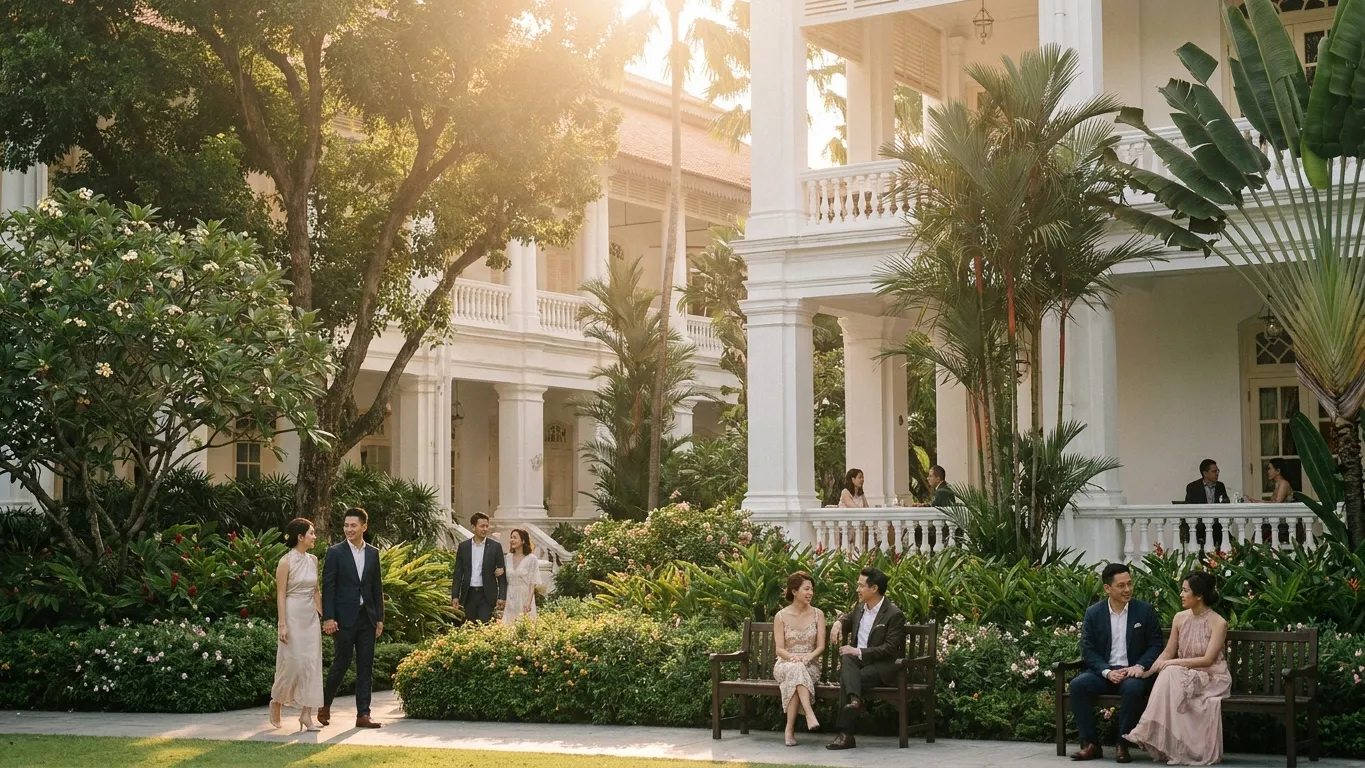
This lines up with a broader shift already visible across the local wedding scene. Singapore's venue market has genuinely diversified over the past two years, with garden estates, rainforest-adjacent resort spaces, and rooftop restaurants increasingly competing with traditional hotel ballrooms for couples who want a setting with more personality than a function room.
For couples currently shortlisting venues, the practical takeaway is to widen the search radius before committing. A hotel ballroom remains the easiest option for large guest counts and built-in logistics, but couples willing to manage a bit more coordination, external catering, tentage, AV, often land on a space that photographs more distinctively and costs comparably once every line item is accounted for.
Quick comparison: what each story means locally
| Story | Why It Matters for Singapore Couples |
|---|---|
| Arena-scale celebrity wedding | Guest logistics and combined photo/video coverage matter at any scale, not just for large weddings |
| Cultural-fusion Italy wedding | Blending two families' traditions within one ceremony requires deliberate sequencing, not improvisation |
| New venue trends flagged by Her World Singapore | Non-ballroom venues are a real, comparably priced alternative worth shortlisting early |
What this month's Singapore wedding news roundup means for local couples

Taken individually, these are entertainment stories. Taken together, they point to something Singapore couples already sense: the wedding day is no longer judged only by scale or budget, it is judged by whether it feels specific to the two people getting married. A megastar's celebration, a hanbok-and-pyebaek ceremony in an Italian villa, and a growing shortlist of non-traditional Singapore venues are all versions of the same instinct, personalise the format rather than default to it.
For Singapore couples currently planning, the practical next steps are straightforward. Lock the legal side early by filing the Notice of Marriage at marriage.gov.sg, since the mandatory 21-day notice period cannot be fast-tracked regardless of how elaborate the celebration becomes. Decide early whether the day leans toward a single cultural tradition or a deliberate blend of two, and brief every vendor, from the caterer to the photographer, on that decision so nobody improvises on the day. And if venue variety is genuinely a priority, start the shortlist further outside the usual ballroom circuit than feels comfortable at first.
A wedding's scale rarely determines whether it feels personal. The sequencing of traditions and the specificity of the venue usually do more of that work than the guest count.