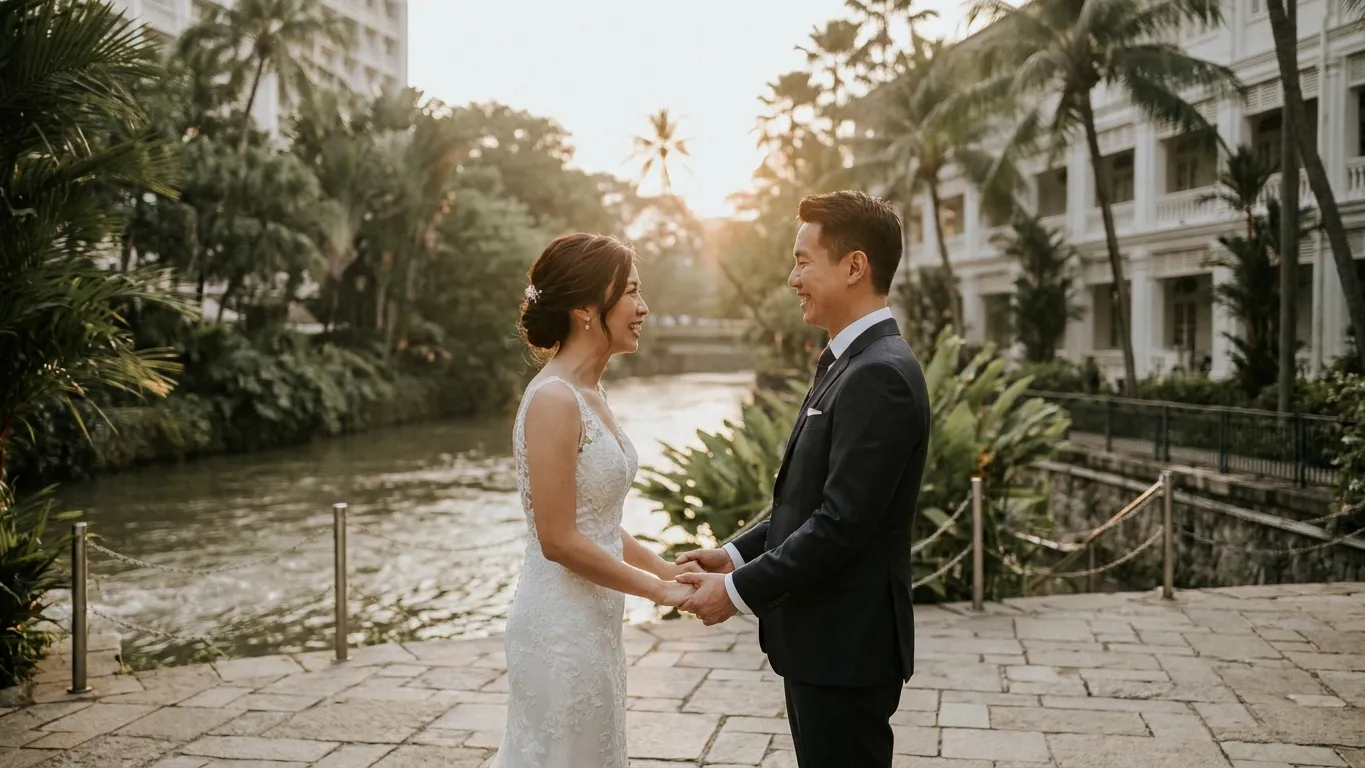
A wedding coordinator in Singapore typically costs anywhere from S$800 to S$2,500 for day-of coordination, S$4,000 to S$6,000 for partial planning, and upwards of S$7,000 to S$15,000 or more for full wedding planning from scratch. Most couples only need the first tier. The confusion isn't really about price, it's about which tier actually matches the chaos a Singapore wedding day tends to produce.
Here's a scenario that plays out almost every Saturday across Singapore: the gatecrash runs twenty minutes long, the banquet hall needs the centrepieces moved by 5pm, and the bride's mother is asking the groom's best man where the tea ceremony cups went, all while the couple is still taking photos at the void deck. Nobody planned for this moment specifically. That's precisely the job a coordinator exists to absorb.
What a Wedding Coordinator Actually Does on the Day
A day-of coordinator is not a planner who shows up once. In most Singapore bookings, the coordinator is briefed weeks in advance on the run sheet, vendor contacts, and family dynamics, then executes silently on the day so the couple never has to field a single logistics question.
Typical responsibilities include:
- Confirming vendor arrival times and chasing late deliveries (florist, cake, AV team)
- Managing the run sheet down to the minute, including buffers for ECP traffic or lift queues in older HDB blocks
- Briefing the bridal party and family on cue timing for the tea ceremony and gatecrash
- Acting as the single point of contact so photographers, caterers and the hotel banquet manager aren't all calling the groom directly
- Handling the small fires: a loose hem, a missing solemniser form, an usher who hasn't shown up
The pattern across most Singapore weddings is the same. The couple that hires a coordinator is rarely paying for creativity. They're paying to not be the person answering logistics questions in their own wedding photos.
Day-Of vs Partial vs Full Planning: What's the Real Difference
The terminology gets used loosely, which is part of why couples overpay or underbuy. Here's how the three tiers actually differ in scope.
| Service Tier | Typical Cost (SGD) | What's Included |
|---|---|---|
| Day-of coordination | 800 to 2,500 | Run sheet execution, vendor liaison on the day, 1 to 2 coordinators on-site for 8 to 12 hours |
| Partial planning | 4,000 to 6,000 | Vendor shortlisting from month 3 to 4 before the wedding, budget tracking, plus full day-of coordination |
| Full wedding planning | 7,000 to 15,000+ | End-to-end from venue selection, all vendor contracts, styling direction, and day-of execution |
A useful way to think about it: day-of coordination solves for the wedding day. Full planning solves for the eight to twelve months before it. Most Singapore couples who've already booked their own photographer, caterer and venue only need the former.
The most expensive hour of a Singapore wedding is rarely the ceremony itself, it's the ninety-minute gap between the ROM solemnisation and the banquet, when nobody has assigned anyone to manage the family photos, the costume change and the venue changeover at the same time.
Do You Actually Need One? A Quick Self-Check
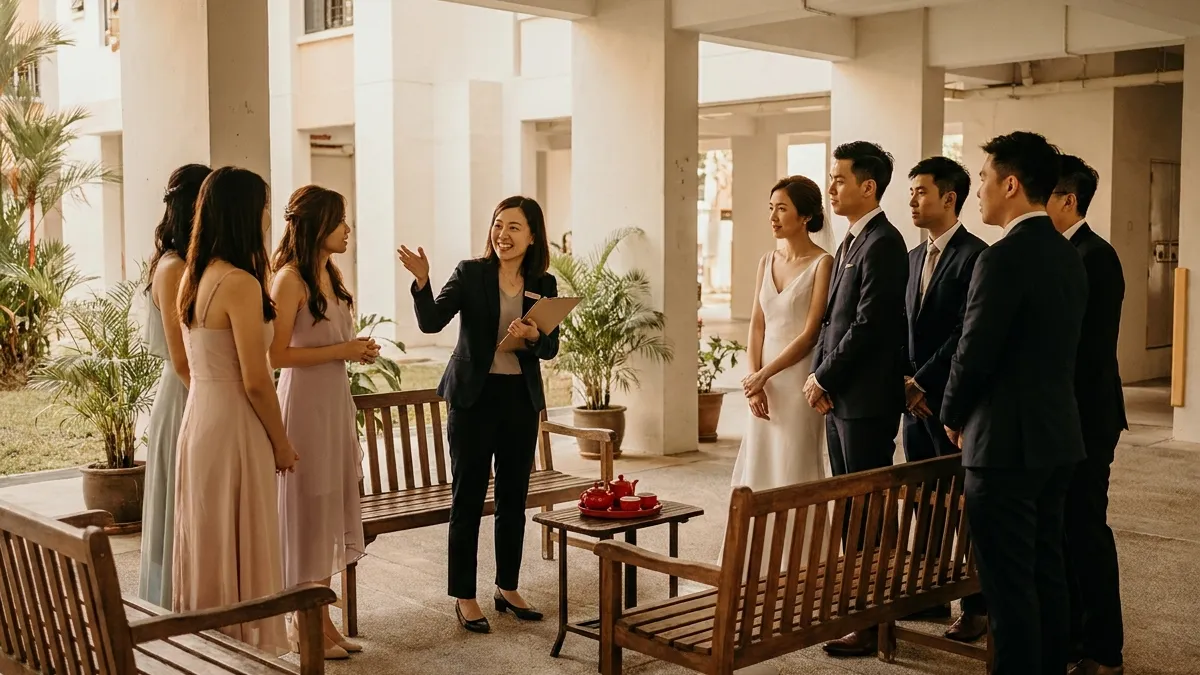
Not every wedding needs a coordinator. A quiet ROM-only solemnisation at the Registry of Marriages on Canning Rise with a lunch after at a hawker centre in Tiong Bahru genuinely doesn't require one. A 200-pax banquet with a tea ceremony at a Tampines HDB void deck, a gatecrash, and a hotel reception in Orchard almost always benefits from one.
Ask these questions:
- Is the event spread across more than one location in a single day (home, void deck, venue)?
- Are there more than 4 vendors who need to be on-site at different times?
- Is a tea ceremony or gatecrash involved, both of which run on unpredictable timing?
- Will family members be assigned tasks (holding angpow, managing elders) that need a non-family person to supervise?
- Is the couple also trying to be present in every photo, rather than managing logistics?
If three or more of these are true, a day-of coordinator earns back its cost within the first hour of the wedding day.
Two Things Most Couples Only Learn the Hard Way
First: tea ceremony order matters more than most couples expect going in. The sequence generally runs eldest paternal relatives before maternal, and skipping a branch of the family, even by accident, is the kind of thing that gets remembered for years rather than the kind of thing a reshoot can fix. A coordinator who has run this before will quietly confirm the family tree with both sides weeks ahead, not on the morning itself.
Second: the September to November monsoon window affects more than outdoor photos. It affects loading timelines. A florist stuck setting up an outdoor ROM garden ceremony in a sudden downpour eats into the buffer meant for hair touch-ups and family photos. Coordinators with real Singapore mileage build a wet-weather contingency into the run sheet by default, not as an afterthought when the forecast changes three days out.
How Coordination Overlaps With Photography and Videography

A detail that surprises first-time planners: the coordinator and the photography team end up working the same clock. A run sheet that's fifteen minutes behind by the tea ceremony usually stays fifteen minutes behind through the actual day photography, which compresses the time available for couple portraits before the 7pm sunset. This is one reason some studios in Singapore now bundle a loose coordination role into the photography package itself, since the photographer and videographer are often the two vendors physically present for the longest stretch of the day anyway. As a point of comparison, studios such as The Aurora Wedding offer combined photographer-and-videographer packages from around S$1,988 for 8 hours of coverage, which puts one vendor on-site for most of the hours a coordinator would otherwise need to manage alone.
That doesn't replace a dedicated coordinator for larger or multi-location weddings, but for a smaller, single-venue wedding it's worth asking the photography and videography team directly how much informal timeline management they're used to handling.
Freelance Coordinator vs Studio-Provided Coordination
Singapore's wedding coordination market splits roughly into two camps: independent freelance coordinators who take on a handful of weddings a month, and coordination services bundled into a larger package from a bridal studio or planning agency. Freelancers tend to offer more flexible scheduling for site visits and often cost less at the day-of tier, but availability on popular Saturday dates, especially around NDP weekend or the year-end wedding season, can be tight. Studio-bundled coordination, on the other hand, usually comes with a backup team member built in, which matters more than couples expect until the week they actually need it.
Neither option is inherently better. A freelancer with ten years of HDB void deck weddings under their belt may out-perform a larger agency's junior coordinator. The deciding factor is almost always track record in the specific venue type being used, not the business structure behind the coordinator.
Questions to Ask Before Booking a Coordinator
- How many weddings have they coordinated in the past 12 months, and in what venue types (hotel ballroom, HDB void deck, outdoor garden)?
- Do they visit the venue beforehand, or only read a floor plan?
- What's the backup plan if the coordinator themselves falls sick the week of the wedding?
- Is the quoted price for one coordinator or a two-person team? Weddings over 150 pax or spread across multiple locations often need two.
- Do they handle vendor payments on the day, or only logistics?
- What happens past the contracted hours if the banquet runs late?
A coordinator who can answer all six without hesitation has likely done this enough times in Singapore specifically to be worth the fee.
A Note on ROM Timing and Coordinators
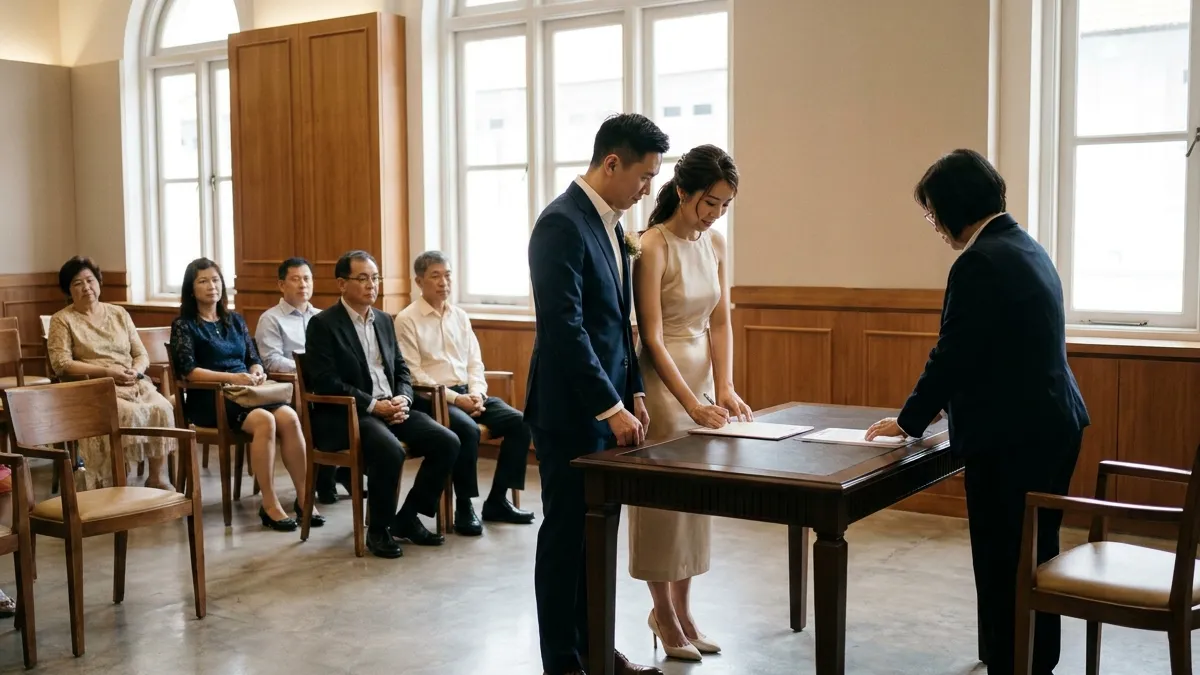
Couples planning a solemnisation should note that the Registry of Marriages requires notice of an intended marriage to be filed at least 21 days before the solemnisation date, according to marriage.gov.sg. This matters for coordinator planning too: a coordinator working backward from the solemnisation date usually starts vendor confirmations and run sheet drafts roughly four to six weeks out, which lines up neatly with when the ROM paperwork itself needs to be finalised. Couples should always verify the latest notice period and application steps directly at marriage.gov.sg before locking in a date.
Insider tip: weekday morning appointment slots at the Canning Rise office tend to have noticeably shorter queues than weekend slots, which matters if the coordinator is also trying to squeeze in a solemnisation-day photoshoot before an evening banquet elsewhere.
The Bottom Line
A wedding coordinator isn't a luxury add-on so much as insurance against the one scenario every Singapore couple fears: standing in the middle of their own wedding, phone in hand, trying to find out where the cake went. For a single-venue, single-day wedding with a handful of vendors, day-of coordination in the S$800 to S$2,500 range usually covers it. For anything spanning multiple locations, multiple cultural ceremonies, or a guest list north of 200, the partial or full planning tiers start to make financial sense simply by the number of decisions they take off the couple's plate months before the actual day.
The wedding day itself lasts maybe twelve hours. The decision of whether to hire a coordinator gets made months earlier, usually in a five-minute conversation that couples either have or regret not having.